
October 2024
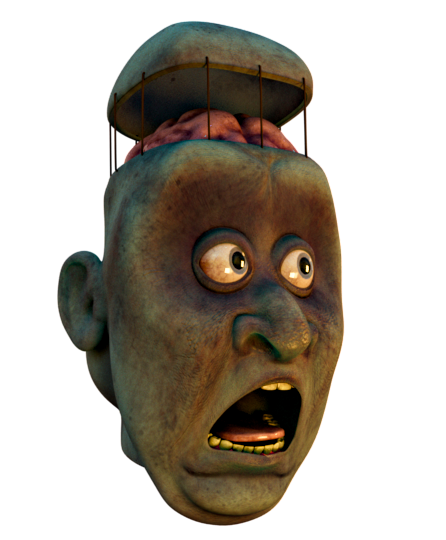
This grimy stand-up comedian, picked up by the traveling circus for his headstrong humor, was never meant to be more than a lab subject for facial rigging. No one ever expected this talking, disembodied head to have legs, but he found a second life a year after his creation…
The class assignment was to make a video game, but video games don’t lead to feature length animation work, and so Harold had his beginning.
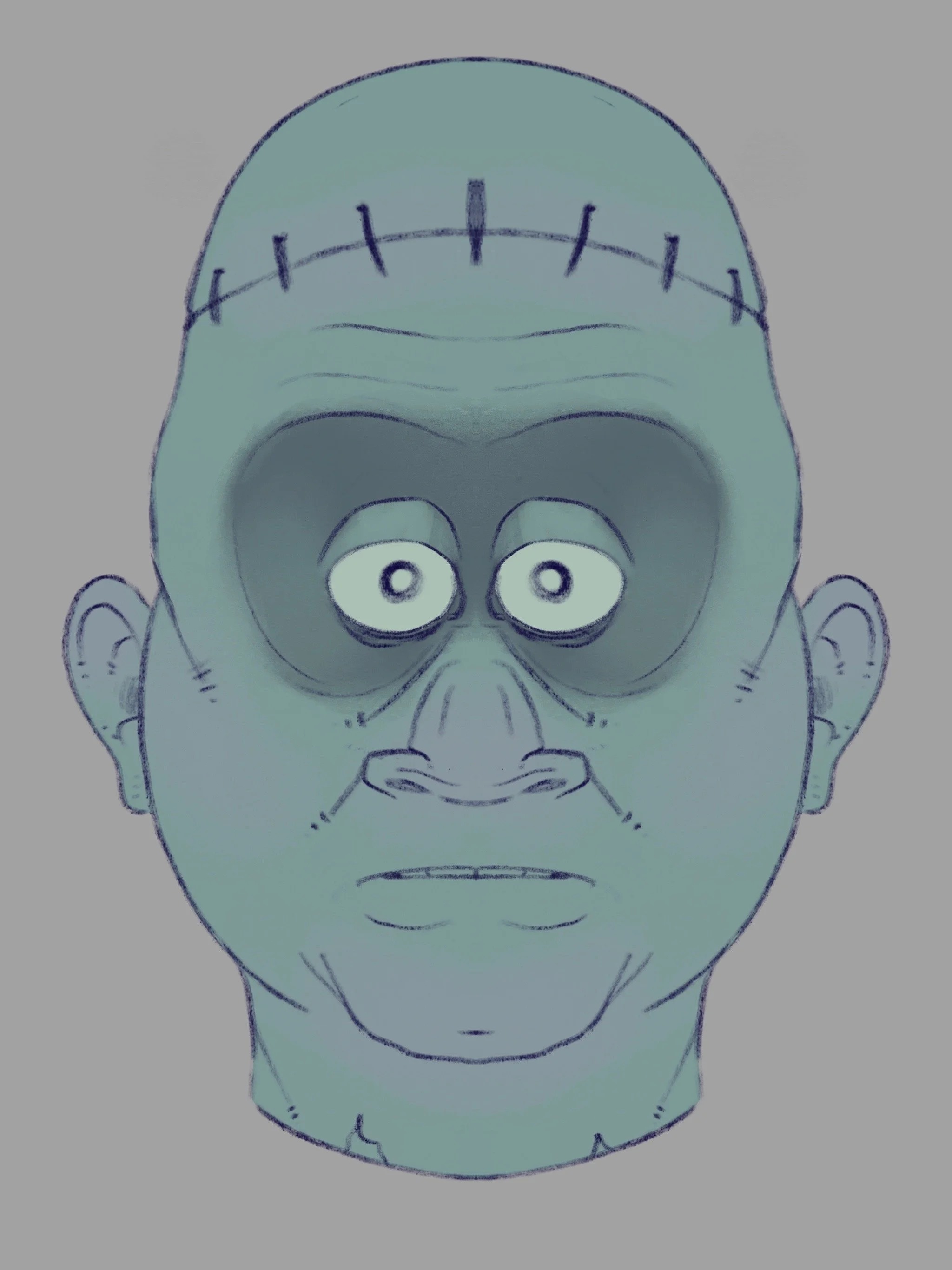
It began with some doodles of a bloated head floating in some type of goo, preserving it from decaying. That sketch became a relatively simple joint and blendshape setup, but it quickly took on a life of its own, and the semester was running out...
Head joints
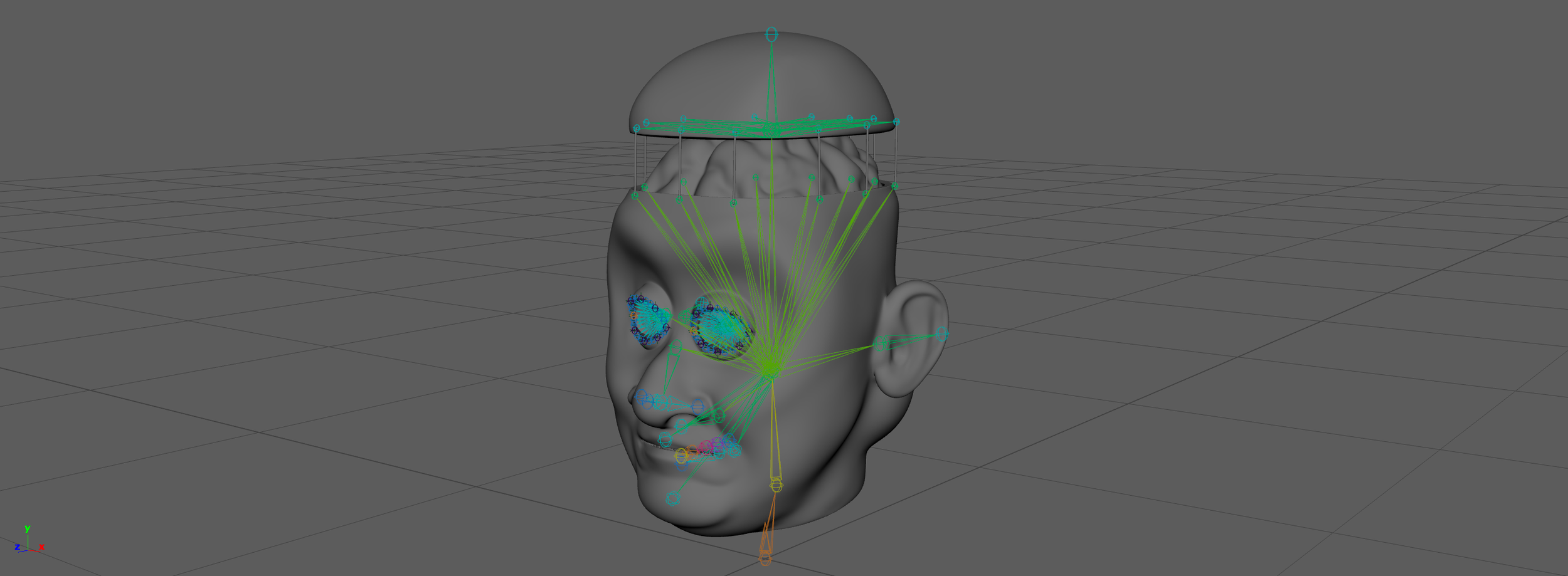
Components of Harold’s rig—like the jaw, nose, lips, ears, eyelids, the top-of-head separation, and the stitching holding his head together—were all joint-driven with the help of corrective blendshapes for clean deformation when needed. Meanwhile, the mouth corners, expressive lip movements, and brow movements were all sculpted shapes connected to the mesh with blendshapes, which were keyed on and off by control movement. This resulted in two simple setups within one fairly robust facial rig, all under a crunched timeline.
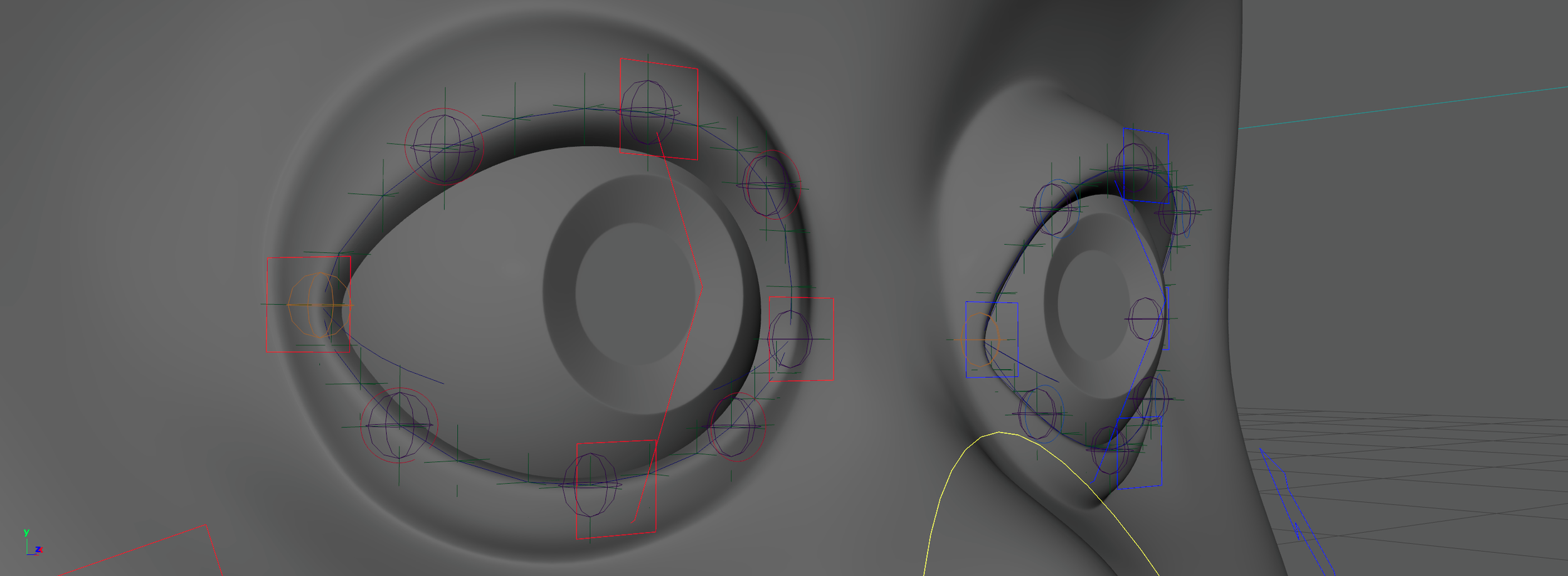
Eyes and Lids
The eyelids were probably the most complex part of Harold’s rig. The setup consisted of curves and a few layers of joints. Curves allow for nice, "spliney," bendy deformation that guide how the joints move the eyelids. There were two layers of joints: skinned joints and driver joints. Skinned joints were skinned directly to the mesh, dictating the deformation of the eyelids. Driver joints move the curves that drive the shapes for the eyelids. So, in turn, the driver joints move the curve, the curve moves the skinned joints, and the skinned joints move the mesh. And all of that gets done twice!
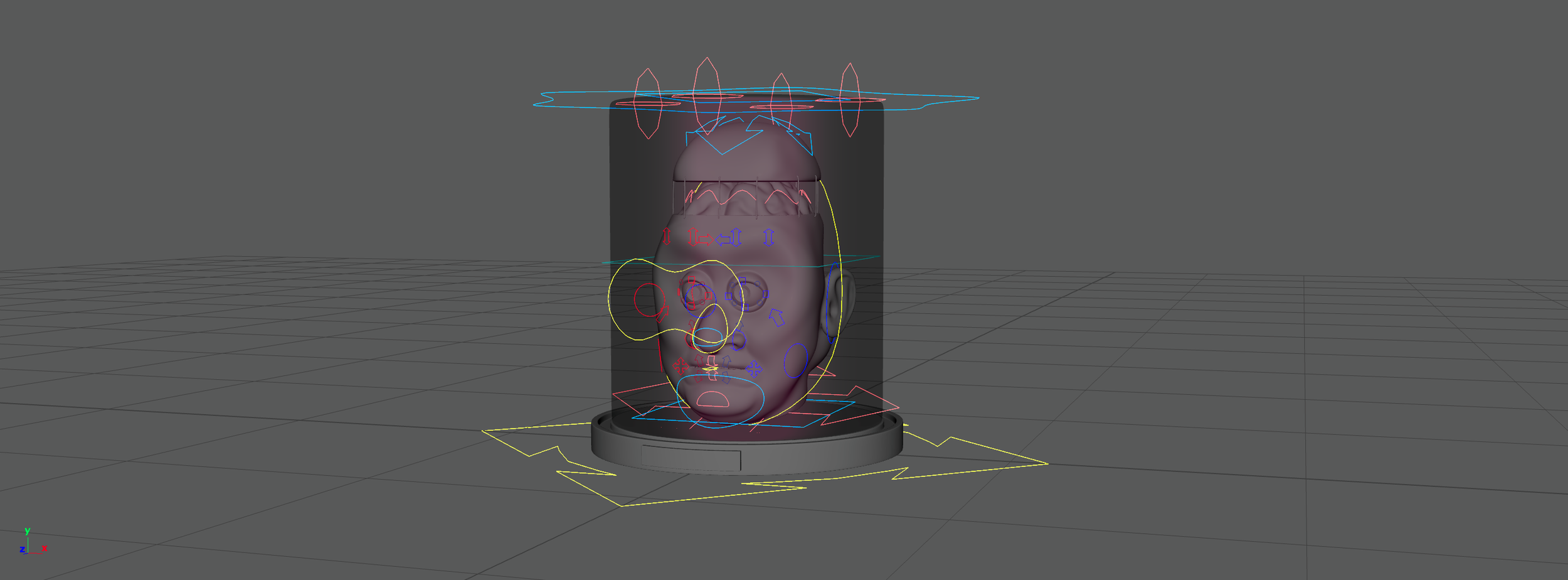
Jar for the Head
For the jar, Matt Poast, a good friend and classmate, shared a rigging trick he had used to rig liquid in a coffee pot. It was simple. It only required two joints and two meshes. By copying the linear weights of a simple plane to the subdivided mesh of the liquid. Now the jar can be emptied and filled to your hearts content. It's a simple rig that creates a neat effect.
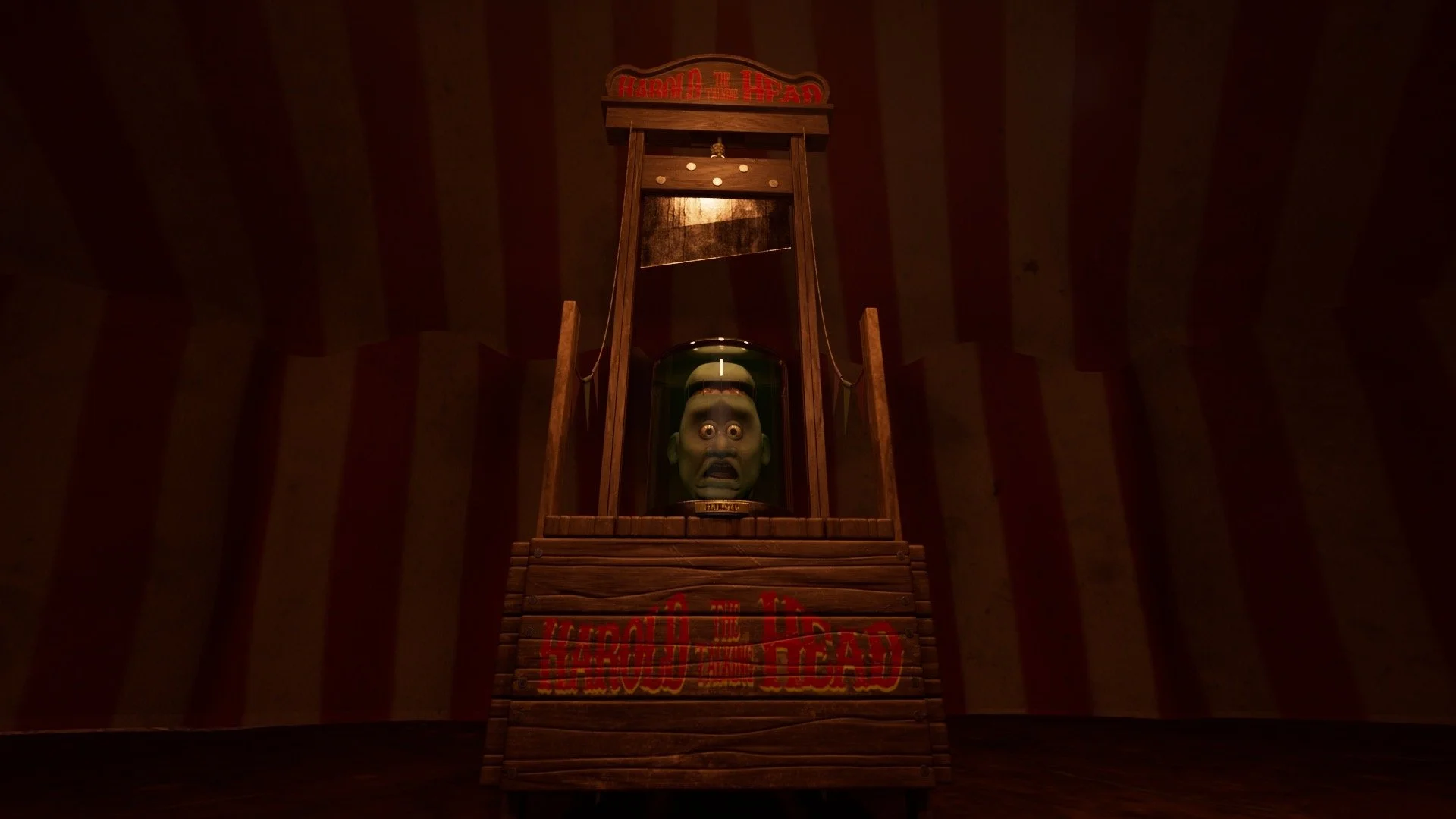
The finished animation was enough for the class, but never fully realized Harold’s full potential. He was always destined to be reborn.
Every aspect was reimagined and rebuilt from the ground up — literally. Replacing the original ground plane with sculpted terrain made a huge difference, but fresh textures and custom grass scattering nodes took it the extra mile.
Lifeless scenes need reanimation, and in the case of this exterior, it needed the full Frankenstein treatment. That meant animated tree gobos, volumetric fog, and a cloth simulation for the flag.
Audiences might not consciously recognize it, but the small details make an animation. Procedural pumpkins with parameterized textures and hand sculpted imperfections. Detailed ropes and posts for the tent. Even crushed cans for the angry crowd to throw at Harold. Even the stock audio was replaced with an original score.
And so with only 24 hours before Halloween, Harold was finally reborn, and his jokes were worse than ever.
Watch the finished short film
Let’s Work Together
Tell us about that project you’ve been dying to get off the ground. Physical, digital, or something else entirely, we want to know how we can help bring your vision to life.